International conference
Scientific programme
AIAC
Lieven Gevaert Research Centre for Photography, Art and Visual Culture
Only a little time after the official announcement of photography’s invention in 1839, a variety of different panoramic cameras, formats and techniques were developed to provide extended views of landscapes, cityscapes, and monuments. While most accounts mention either Joseph Puchberger or Friedrich von Mertens as inventors of the first panoramic camera, and thus situate the invention of panoramic photography in the early years of the 1840s, there is little known about precisely when, how, and under which conditions the panoramic view entered photography. Most of the sparse studies in the field of panoramic photography are focused on the development of optical devices, formats, or techniques. In this perspective, the history of panoramic photography is a history of rotating cameras, swing-lenses, curved plates, montage, and printing methods.
One aim of this conference is to give a historical overview of panoramic photography from its beginnings in the mid-nineteenth century until most recent developments in photography including digital imagery and VR environments. This history is neither linear nor homogeneous. Already the commonly used composite terms “panoramic photography,” “panorama photography,” and “photographic panorama” evoke the genuine ambivalence and heterogeneity of the phenomenon. Panoramic photography is, in fact, part of both the history of the circular panorama, invented by Robert Barker towards the end of the 18th century as a popular mass medium, and the history of photography, presented to the public some fifty years later as the ultimate means of reproducing and multiplying the real. Due to its apparent qualities of providing authentic true-to-life documents, photography has, from the start, played a decisive role as preparatory sketches for painted panoramas. Vice versa has the circular panorama not only inspired the idea to create horizontal photographs covering elongated fields of view of 140 to 360 degrees; it is also at the origin of a whole series of photographic immersive environments and devices, ranging from the Lumière brothers Photorama of 1900 to recent developments of digital technologies such as Google Street View and Photosynth.
Arno Gisinger, Université Paris 8
Guillaume Le Gall, Sorbonne Université
Alexander Streitberger, UCLouvain
Hilde Van Gelder, KU Leuven
PROGRAMME
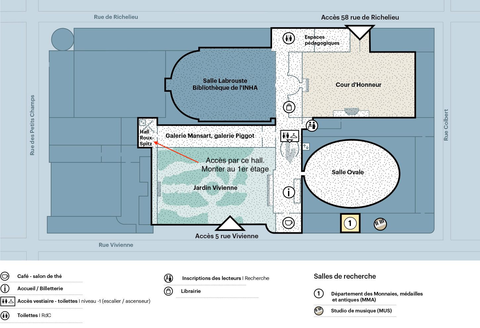
Mercredi 15 avril 2026 (INHA, salle Vasari)
Président : Arno Gisinger (Université Paris 8)
- 14h Accueil
- 14h15 Alexander Streitberger (UCLouvain) et Guillaume Le Gall (Sorbonne Université)
Introduction – Extending Horizons: Panoramic Photography in an Intermedia Perspective - 15h Céline Flécheux (Université Paris 8)
Horizon : extension et profondeur - 15h45 Pause
- 16h Kathrin Yacavone (University of Marburg)
Panoramic Vision and Media Histories: Postcolonial Perspectives in Contemporary Artistic Practice - 16h45 Bernd Stiegler (University of Konstanz)
Images of Omnivision - 17h45 Clôture de la journée
Jeudi 16 avril 2026 (BnF Richelieu, conference room)
Président : Guillaume Le Gall (Sorbonne Université)
- 9h Jean-François Vincent (Bibliothèques Mazarine et de l’Institut de France)
Aimé Civiale (1821-1893) photographe : le panorama « sans interruption » de « toutes les grandes chaînes des Alpes » - 9h45 Justin Carville (Institute of Art, Design and Technology, Dun Laoghaire)
Topographies of Maritime Space: the Panorama Albums of the Irish Lighthouse Commissioners and British Colonialism - 10h30 Pause
- 10h45 Lucie Grandjean (Institut Catholique de Paris)
Fragmenter le territoire américain : photographie et regard panoramique au XIXe siècle - 11h30 Julie Hochenedel (Sorbonne Université)
La vision panoramique au musée : jeux de regards au XIXe siècle - 12h15 Pause déjeuner
Président : Guillaume Le Gall (Sorbonne Université)
- 14h Sylvie Aubenas, Flora Triebel (BnF) et Vincent Guyot (SFP)
Les photographies panoramiques dans les collections de la Bibliothèque nationale de France - 1 - 14h45 Pause
- 15h Sylvie Aubenas, Flora Triebel (BnF) et Vincent Guyot (SFP)
Les photographies panoramiques dans les collections de la Bibliothèque nationale de France - 2 - 15h45 Pause
- 16h Hilde Van Gelder (KU Leuven) et Arno Gisinger (Université Paris 8)
Fragmenter le panorama ? - 17h Hilde Van Gelder, Arno Gisinger, Guillaume Le Gall, Alexander Streitberger, Carole Maigné (Université de Lausanne)
Table ronde - 18h Clôture de la journée
Vendredi 17 avril 2026 (INHA, salle Vasari)
Président : Alexander Streitberger (UCLouvain)
- 9h Neda Zanetti (Université de Lausanne)
La profondeur par le montage – le faux-terrain panoramique et le raccord photographique - 9h45 Valentina Perazzini (UCLouvain)
Arrière-plans. Les collages panoramiques de Sammy Baloji - 10h30 Pause
- 10h45 Stefanie Diekmann (University of Hildesheim)
Messmer’s Panoramas: Image Constellations and Visual Archeology - 11h30 Danièle Méaux (Université Jean Monnet Saint-Étienne)
Vision panoramique et agriculture industrielle dans les livres de photographie de Philippe Bazin, Sylvain Gouraud et José Diniz - 12h15 Pause déjeuner
Présidente : Hilde Van Gelder (KU Leuven)
- 14h Gonzalo Munoz-Vera (School of Architecture at Virginia Tech)
From Rotundas to Screens: Panoramic Vision Beyond Earth - 14h45 Jens Ruchatz (University of Marburg)
Framing the digital panorama: Taking pictures in Google Street View - 15h30 Clôture du colloque